
The Liturgical Problem is Much Deeper than the Novus Ordo
An Angel proved that in 1916


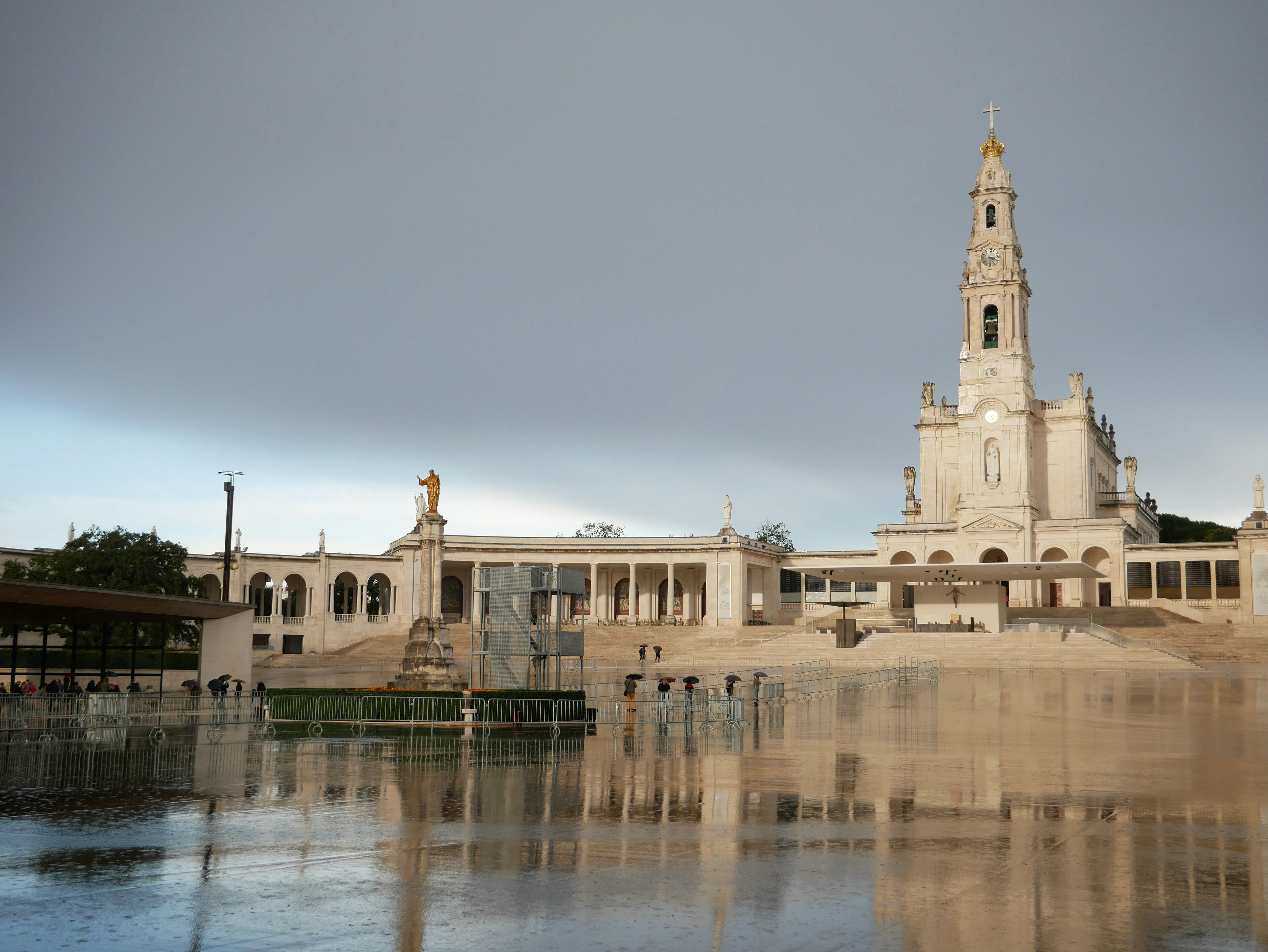
What is the significance of May 13, 1917 and the rest in the Providence of God? Before we discuss that, we need to consider the timing of the Angel’s apparition. In the mysteries of Fatima, many amazing things come out in the timing of God’s Providence. Sr. Lucia later noted the significance of timing with these words:
…I see the Message ever present in the immense Being of God, to be sent to earth on the day and hour predestined by Him in the designs and plans of His infinite Mercy… I see the Message over time and without time, because in God’s plans, in the Light of His immense Being, it always was as if it were happening now, at this very moment, in the precise moment predestined by Him for that day, hour and moment, because in the immense mirror of His Divine Being, everything is present without either past or future.[1]
Thus we can presuppose that the timing of these apparitions was chosen by God. The question is: why did God choose this time?
On the weekend of the 1st of April 1917, Easter Sunday (“Pascha”) Weekend in Russian Orthodoxy, when Vladimir Lenin and Blessed Leonid Feodorov both arrived in Petrograd from east and west, three Portuguese children were celebrating Low Sunday, which is the Sunday after Easter in the Latin Rite. These three children were Francisco Marto, Jacinta Marto, and Lucia dos Santos, ages eight, seven, and ten, respectively. While God was working in Russia in a hidden way, He was about to work again in Portugal the next month on May 13. This date has a significance for Russia, which we will discuss later. But before this date arrived in 1917, the three Fatima children had already experienced three messages from heaven.
The First Angelic Apparition – a Russian-Style Prayer
These were three apparitions of the “Angel of Peace,” who appeared to the Fatima children in the summer of 1916. “They saw a light far over the tops of the trees” and “a young man” shining “penetrated by the rays of the sun.”[2] So already we have a hint about the final Miracle of the Sun on October 13th, 1917.
(The significance of light is hard to overestimate here. Modernity can be defined by its most conspicuous aspect: the obscuring of the God-created light of the Sun, Moon, Stars and fire by means of the man-created light of street lamps, light bulbs, movie screens and smart phones. Since these latter lights also symbolize and typify Modernity’s errors and heresies, the use of light in the Fatima apparitions is highly significant – especially as iconographic light plays a massive role in the Russian spiritual and liturgical tradition, as we will see.)
At his first appearance, while all the world stood in ruins during the Great War, the angel said “Do not be afraid… I am the Angel of Peace” and then made an eastern-style prostration, “kneeling on the ground, he prostrated himself until his forehead touched it.”[3] He then repeated three times a Eucharistic Reparation prayer:
My God, I believe, I adore, I hope, and I love You! I beg pardon of You for those who do not believe, do not adore, do not hope and do not love You![4]
The posture and the thrice repetition seem significant, because both are far more common in the Russian liturgy than in the Roman rite. In the Roman Rite, of which the children were familiar, there is only one place where an entire prayer is repeated thrice, the Domine, Non Sum Dignus. By contrast, the whole Russian liturgy and spiritual tradition includes many times of repeating prayers three times in honor of the Trinity. For example, at the consecration in the Russian liturgy the people say “Amen. Amen. Amen.” (The Novus Ordo Missae adopted this eastern custom in its common custom of the “Great Amen” after the Minor Elevation.)
As for the prostration, there is no such posture ever used in the Roman rite. This is a particular posture of adoration used in the eastern liturgies, especially during Lent at the prayer of St. Ephraim, as well as on the Sunday of the Holy Cross, the third Sunday of Great Lent.[5] (Some have seen Muslims prostrate themselves in this way, but this posture predates Islam and is actually a Christian gesture.) The Roman rite only has one posture that comes close to it, on Good Friday, whereas the posture is used in Russia throughout Lent, during the prayer of St. Ephraim.
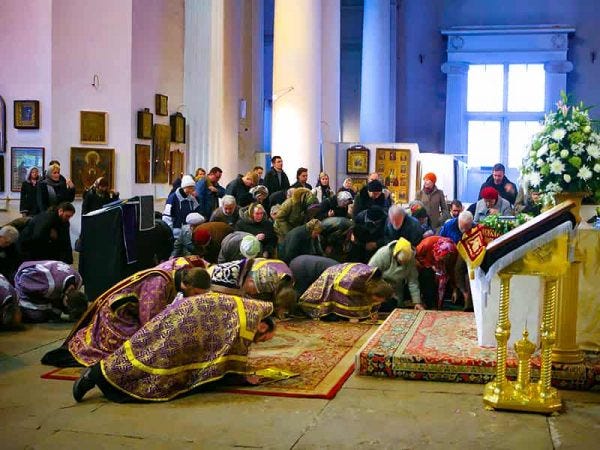
Thus the first message from heaven encouraged western Christians to adopt a Russian prayer posture of penance for sinners. Sister Lucia remembered this detail about the prostrations decades later – which would have been very conspicuous to any Latin rite Christian in Western Europe - and recorded it in the book released in 2006. Sister Lucia throughout her life prayed this prayer, together with the full, Russian prostrations.[6] (I encourage all devotees of Fatima to do the same. The Fatima Center has a great prayer card of this and the other Seven Prayers of Fatima which you can download and print and TAN Books has a good version for purchase.)
Second Angelic Apparition – Penance for Sinners

Continue reading this post for free, courtesy of The Meaning of Catholic.
 | A guest post by
|